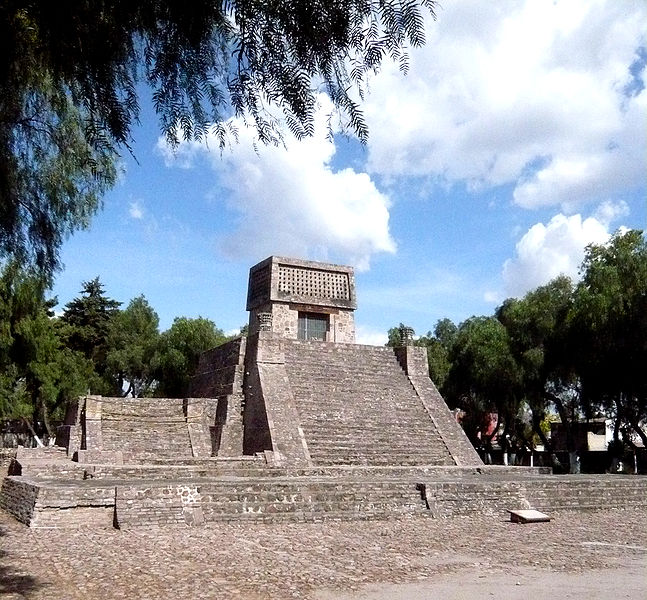
Mexica, this is the real name in Nahuatl language of the civilization known as Aztec, name given by the German Alexander von Humboldt to distinguish them from the other people of the same area.
Coming from south of the modern United States, the original population was nomadic, always looking for better opportunities.
Led by their Gods, they quickly became a glorious empire.
Migration and conquest: the rise of a new power.
In the early 13th century, the land then called Mesoamerica was witnessing the fall of the Toltec reign, and the unstable situation gave a new generation the chance to settle and flourish.
Mexicas (hence the name of the modern country), following the prophecy of a bright future, left their legendary homeland Aztlàn, moving southward and taking place on a little island on the Lake Texcoco.
“An eagle, perched on a cactus growing from a rock in the middle of the lake, devouring a snake”: that was the sign. Huitzilopochtli, the god of the sun and war, guided them to that unfriendly piece of land, where Mexicas saw their fate revealed, and started building their new capital city, Tenochtitlàn.
It was 1325 A.D.
Stone upon stone, with sophisticated techniques, they managed to create a fully functioning city, with temples and palaces, and whether the majority of the common houses was made of wood, it is likely that most of them had a steam-bath.
A society strictly sorted by classes, with nobles and priests ruling every aspect of their life, warriors enjoying the fame and the glory of their military victories, and servants, slaves and war prisoners living only to please their masters.
But above all else, religion was the supreme code to be followed.
With a calendar of 365 days per year, and a ritual year of only 260, every day was spent worshipping the gods, in particular Quetzalcoatl (the “Feathered Serpent”), who played an important role in leading the Aztecs to greatness, and ruin.
Everything, however, had a price, so a human sacrifice was due to the gods in return for their favours: the heart of a slave, or a volunteer warrior, was publicly and mercilessly ripped out and offered to the deities; that way, they would please the god and assure themselves its benevolence.
For over two centuries they kept alive and spread their unfailing faith and rituals of blood, until blood was the final price to pay for the betrayal of their own gods.
It was 1519 A.D. when a Spanish young commander called Hernan Cortes landed on Tenochtitlan’s shores with about 700 men: greeted as an honoured guest, Mexicas believed he was the embodiment of their beloved Quetzalcoatl, whose return had been prophesied a long time before. But smart and ambitious was the conquistador, and he tricked them, chaining the Aztec emperor Montezuma II, at first, then attacking and killing those soldiers and common people who would dare to oppose him.
If barely 200 years had been enough for a great empire to rise and gain a place in history, it took only 2 years time to Cortes to reduce everything to bones, and dust.
 Within the Wolf's Mind